A probation period without a written confirmation at the end is an incomplete process. Many Indian employers run their probation cycles correctly but then delay the letter, or never issue one at all. That gap quietly alters the employee's legal status in ways the employer did not intend. This guide covers what the letter must contain, when to issue it, and what happens if you do not.
Trusted by 4,000+ companies across India
A probation confirmation letter is a formal document issued by an employer once an employee has satisfactorily completed their probationary period. It marks the transition from probationary to permanent employment status and records what changes as a result: notice period, benefits, and entitlements that were deferred until confirmation.
In India, probation periods typically run between three and six months. Some companies extend this to twelve months depending on the seniority or complexity of the role. The confirmation letter is what formally closes that period. Until it is issued and acknowledged, the employee's status remains technically ambiguous, which has consequences for both parties.
The letter is not the same as an increment letter or an appraisal communication, though companies sometimes conflate the two. Confirmation concerns employment status. Increments concern compensation. Both can be covered in the same document if the company chooses, but the confirmation itself is a distinct legal step.
The date on the confirmation letter is not just a formality. It is the operative date for notice periods, benefits, and employment status.
If an employee continues working past the end of their stipulated probation period without any communication, Indian employment practice generally treats them as having attained permanent status by default. The confirmation letter you issue three months late does not retrospectively reset that clock. Courts have looked at conduct and the passage of time, not just paperwork.
The notice period applicable to a probationer is shorter than the one that applies after confirmation, usually a matter of days or one to two weeks versus one to three months. If no confirmation date is established, the employee can reasonably claim the longer post-confirmation notice period never took effect. That argument is more viable when no letter was ever issued.
Some benefit enhancements, such as higher insurance cover or senior leave entitlements, are linked to confirmed status. When the confirmation date is absent or disputed, the employee may claim retroactive entitlement. The employer may contest it. The absence of a timely letter is what makes the dispute possible in the first place.
An employee who completes probation and receives no formal acknowledgement for weeks or months tends to draw their own conclusions about the company's administrative rigour. That perception, formed early, is hard to reverse. The confirmation letter takes a few minutes to generate. The goodwill it creates in those first months of confirmed employment is disproportionate to the effort.
Each element serves a purpose. Omitting one does not make the letter shorter. It makes it incomplete.
State these clearly at the top. If the designation or department changed during probation, use the current confirmed details and note the change where relevant. Ambiguity about who the letter refers to is avoidable.
Include the specific date on which the probation period concluded. This is the reference point for notice period calculation, benefit entitlement, and any subsequent dispute about employment status. A vague reference to "the completion of your probation" without a date is insufficient.
State explicitly that the employee is confirmed as a permanent employee of the company with effect from the date of probation completion. This is the operative clause. Everything else in the letter flows from it.
State the notice period that now applies to both parties from the confirmation date. If the employment contract already set this out, the letter should reaffirm it. If there is any discrepancy between the contract and the letter, the letter issued at confirmation will often be treated as the current operative document.
List any benefits that become available or change at the point of confirmation. This may include enhanced health insurance cover, revised leave entitlements, gratuity eligibility commencement, or other company-specific perquisites. Stating them in the letter avoids later disagreement about when each entitlement started.
If a salary increment accompanies confirmation, state the revised gross figure, the effective date, and the component breakdown if it has changed. Do not leave this to a separate document if it is part of the confirmation decision. Disconnected paperwork creates reconciliation problems later.
Include the date the letter is being issued, which may differ from the probation end date if there has been a processing delay. The letter should be signed by a person with the authority to confirm employment on behalf of the company, typically the HR head or an authorised director.
Indian labour law does not prescribe a fixed probation period or a mandatory format for the confirmation letter. The Industrial Employment (Standing Orders) Act, 1946 governs establishments above a certain headcount in scheduled industries and sets some norms around probation, but its reach is not universal. For most SMEs, the terms are governed by the employment contract and company policy.
What the law does require, more emphatically since the New Labour Codes 2025 came into force in November 2025, is that written appointment letters be issued to workers. A probation confirmation letter sits within that framework. Offrd's probation confirmation letter format is compliant with the New Labour Codes 2025. The original offer letter and appointment letter establish the probation terms. The confirmation letter closes them.
If a company intends to extend probation rather than confirm, that extension must be communicated in writing before the original probation period lapses. An extension communicated after the fact is considerably harder to defend.
Most errors in probation confirmation letters are not deliberate. They are the product of templates passed between managers without a single point of accountability.
When different managers draft letters using their own versions of a template, the notice period stated in one letter may differ from another for the same role. Those discrepancies surface during disputes and can be used to challenge the company's stated policy on the grounds that it was not consistently applied.
Calculating the probation end date from the joining date seems straightforward, but it is frequently wrong when done manually. A six-month probation that started on 15 August does not end on 15 February in every year or for every calendar. Errors here mean the operative date in the letter does not match what the contract intended.
A letter drafted in a hurry often omits the revised notice period or the benefits that take effect from confirmation. The employee receives a letter that confirms their status but is silent on the terms that changed as a result. That silence becomes interpretable later, and rarely in the employer's favour.
The most consequential error is when the confirmation letter states terms that contradict the original employment contract. This happens when the person drafting the letter does not have the original contract in front of them, which in most manual processes is the norm rather than the exception.
Three to six months is the range most Indian employers use. Senior or specialised roles sometimes carry a twelve-month probation period, which must be stated in the original employment contract. Whatever the duration, the confirmation letter should go out within a few days of the probation end date, not weeks after it.
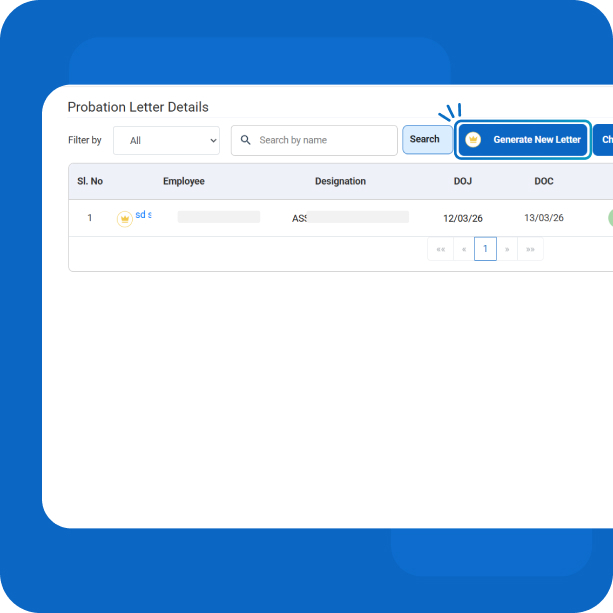
Configure your template once. Offrd generates the letter when the probation period closes.