A salary increment without a formal letter leaves the revised terms unrecorded. The employee's payslip will reflect the new figure, but the employment record does not. That gap creates problems when the employee produces proof of income, when TDS needs to be recalculated, or when a dispute arises about what was agreed. Whether you call it an appraisal letter or an increment letter, the document serves the same purpose: it puts the revised terms in writing before the next pay cycle closes. This guide covers what it must contain, what Indian law expects, and where most companies get it wrong.
Trusted by 4,000+ companies across India
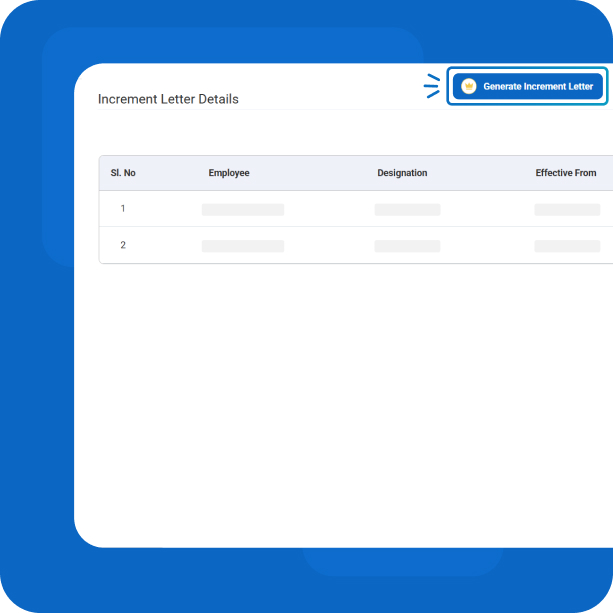
An appraisal or increment letter is a formal document issued by an employer to record a salary revision, a change in designation, or both. It sets out the revised compensation, the effective date, and any other terms that change as a result of the appraisal decision. It is the written counterpart to whatever was communicated verbally during the appraisal conversation.
The two terms are often used interchangeably but they are not identical. An appraisal letter documents the outcome of a performance review, which may or may not include a salary change. An increment letter specifically confirms a salary revision. In practice, most Indian companies issue a single letter that covers both the performance assessment summary and the revised compensation.
Most Indian companies run appraisal cycles aligned to the financial year, issuing letters in March or April. Some run mid-year reviews in October. An annual increment tied to the April financial year start is the most common arrangement, though the exact cycle is set by company policy rather than statute. The letter should reflect whatever was stipulated in the original employment contract regarding appraisal frequency and eligibility.
The letter takes a few minutes to generate. The problems that arise from not issuing one take considerably longer to resolve.
If an employee disputes their salary at any point, the increment letter is the document that establishes what was agreed and when it took effect. Without it, the employer must rely on payslip history alone, which shows what was paid but not what was formally agreed. In a labour dispute, that distinction matters. Courts and labour authorities look for written evidence of the terms both parties accepted.
When a salary revision takes effect mid-year, TDS must be recalculated for the remaining months. The effective date on the increment letter drives that calculation. A letter issued weeks after the increment was applied informally creates a mismatch between what payroll is deducting and what the correct liability should be. That mismatch appears in Form 16 and can require correction by the employee in their income tax return.
Employees who receive a clear, timely increment letter know where they stand. Those who were told verbally that their salary would go up but received nothing in writing are left uncertain. That uncertainty is one of the more reliable precursors to an employee beginning to look elsewhere. The letter costs nothing beyond the time to generate it, and the signal it sends about how the company operates is disproportionate to that effort.
The revised salary must meet the minimum wage applicable to the employee's role and state. The increment letter, read alongside the payslip, creates a contemporaneous record of compliance. If a minimum wage revision is notified after the increment letter is issued and the new salary still falls below the revised minimum, the employer must issue a further revision. Having a clear letter for each revision makes that audit trail straightforward.
Each element has a reason. Leaving one out does not make the letter shorter. It makes the revised terms less complete.
State these at the top. If the designation is changing as part of the appraisal, use the new designation and note the previous one where relevant. Ambiguity about who the letter refers to, or what role it applies to, is avoidable and creates unnecessary friction later.
This is the most operationally important field in the letter. The effective date determines when TDS must be recalculated, when the new figures appear on payslips, and what the employee can quote in loan applications. A letter without a clear effective date, or with a vague reference to "from this month", is functionally incomplete.
Show both the old and new figures, broken into their components: basic salary, HRA, special allowances, and any other fixed pay elements. Showing only the revised gross figure without a breakdown makes it impossible to verify that individual components are correctly calculated and that the overall structure remains compliant with PF and tax rules.
State the revised cost to company figure so the employee has a complete view of their total remuneration, including employer contributions to PF and any other benefits. This is the figure most commonly used in background verification and external comparisons. An increment letter that states only the gross monthly salary without the annual CTC leaves the employee with an incomplete picture.
If a one-time performance bonus accompanies the increment, list it as a separate line item with the payment date or disbursement schedule. Combining it with the salary revision in a single undifferentiated figure creates confusion about what is recurring and what is a one-time payment, which affects both the employee's financial planning and the payroll team's processing.
If the appraisal includes a promotion or a change in reporting structure, state the new designation, the new reporting manager, and the date from which the change takes effect. A salary revision and a title change communicated in separate documents, or only partially documented, leave gaps in the employment record that surface during background checks or when the employee's next employer asks for verification.
The letter must be dated and signed by someone with the authority to revise compensation on behalf of the company, typically the HR head or a director. An undated letter or one signed by a person without clear authority creates questions about its provenance. Both are avoidable.
Indian law does not mandate salary increments or prescribe a format for increment letters. The obligation to revise salary arises from two sources: the employment contract, if it specifies an appraisal cycle or increment eligibility, and minimum wage legislation, which requires that compensation remain above the notified minimum for the relevant category and state.
The New Labour Codes 2025, which came into force in November 2025, consolidate employment documentation obligations including written appointment letters and wage records. Offrd's increment letter format is compliant with the New Labour Codes 2025. If the employment contract states that the employee is entitled to an annual appraisal, failing to conduct one or withholding an increment without reason may constitute a breach of contract. The employee's remedy in such cases is civil. Indian labour law does not directly regulate the quantum of salary increments for most private sector employees above the minimum wage threshold.
The tax implications are governed by the Income Tax Act, 1961. A salary revision mid-year requires payroll to recalculate TDS for the remaining months. The increment letter's effective date is the reference point for that calculation. If the revised salary pushes the employee into a higher tax bracket, payroll must account for that shift from the effective date rather than from the next financial year.
These situations come up regularly and are worth planning for before the appraisal cycle begins.
When an increment is applied with a retrospective effective date, the arrears must be calculated and paid separately, or included as a named line item on the payslip for the month of payment. TDS for the arrears is calculated in the month they are paid, not the month they relate to. The increment letter should state the retrospective effective date clearly, and payroll must handle the arrears and TDS correctly for that month.
If a company chooses not to issue increments in a given year, communicating that decision in writing is better practice than silence. Employees who are expecting a review and receive nothing, not even a letter confirming there will be no increment this cycle, tend to assume the worst and sometimes leave before any explanation is offered. A short written communication about the decision, even if the answer is no change this year, is more considerate and less damaging than not communicating at all.
Salary revisions during the probation period are uncommon but not unheard of. If an increment is issued before the employee is confirmed, the letter should note the current probationary status and clarify that the revised salary is effective from the stated date regardless of confirmation. This avoids any later argument that the increment was contingent on confirmation.
When increment letters are drafted individually by managers without a standard template, the format and content vary. Some letters state CTC, others state gross monthly. Some include the previous salary, others do not. That inconsistency becomes a problem during audits, background checks, or when employees compare letters. A single configured template applied across the company removes that variability.
India's financial year runs from 1 April to 31 March. Most corporate appraisal cycles are timed to close in March, with increment letters issued in late March or early April so the revised salary takes effect from the start of the new financial year. This alignment simplifies TDS recalculation since the increment coincides with the beginning of a new annual tax cycle rather than mid-year.
Configure your template once. Offrd generates the letter when the appraisal decision is made.